Conservancy News

Exclusive interior access to landmark residences along Adelaide Drive on April 12

Santa Monica, CA (April 2026) — The Santa Monica Conservancy will open the doors to some of the city’s most historically significant and architecturally distinct residences during the Landmarks of Adelaide Drive Tour on Sunday, April 12, 2026, offering a rare opportunity to step inside homes that are typically inaccessible to the public.

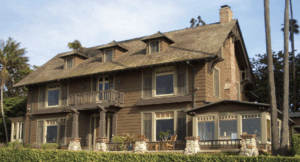
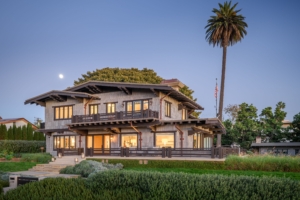
Set along the edge of Santa Monica Canyon with sweeping views of surrounding mountains and the Pacific Ocean, Adelaide Drive has long been one of Santa Monica’s most notable residential streets. Beginning in the early 1900s, the corridor attracted civic leaders, entrepreneurs, and early developers who commissioned homes by prominent architects, shaping the city’s early identity.

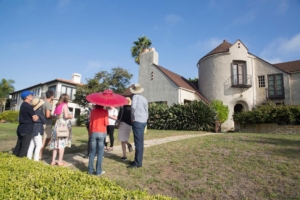
This guided walking tour includes exclusive interior access to two designated landmark homes, along with exterior visits and historical insights into several other notable properties along the street.

Featured Homes

  1. Second Roy Jones House (1907) Designed by architect Robert Farquhar, this residence was home to Roy Jones, a business leader and founder of the Bank of Santa Monica, as well as the son of city co-founder John P. Jones. Farquhar is best known for the Clark Library at USC and the California Club in downtown Los Angeles.
  2. Boehm House (1925) A picturesque French Norman Revival design recognized for its inventive design and fine craftsmanship.  Recently restored and expanded, the home received a 2025 Preservation Award from the Santa Monica Conservancy.

Additional Tour Highlights

The tour also includes exterior views and stories behind several prominent properties along Adelaide Drive, including:

  • Gillis House (1906), home to a pioneering developer and owner of the Santa Monica Land & Water Company
  • Milbank House (1911), a restored Craftsman residence set prominently along the hillside
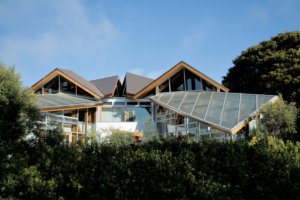
  • Frank Gehry Residence, a landmark of the future that plays homage to its historic predecessor.

 “Adelaide Drive represents a unique concentration of early residential design and civic legacy that continues to define the character of the city today,”

– Board Member Ruthann Lehrer, Santa Monica Conservancy.

Event Details

Date: Sunday, April 12, 2026

Time: 1:00 PM to 4:00 PM

Tickets:  smc.givecloud.co/2026adelaide

Space is limited, and advance registration is encouraged.

About Santa Monica Conservancy

The Santa Monica Conservancy is a 501(c)(3) nonprofit organization dedicated to preserving and celebrating the city’s architectural and cultural heritage through advocacy, education, and partnerships. Founded in 2002, the Conservancy offers public programs including guided tours, events, and educational initiatives that connect the community to historic places.

Media Contact:

Melina Castorillo

Communications Specialist

Santa Monica Conservancy melina@smconservancy.org

Media Assets Available Upon Request

  • Adelaide Drive streetscape with ocean views
  • Architectural details and featured residences

We’re only FIVE days away from the premiere of Old Friends: A Toast to Legacy Business.

Old Friends: A Toast to Legacy Business

Old Friends: A Toast to Legacy Business

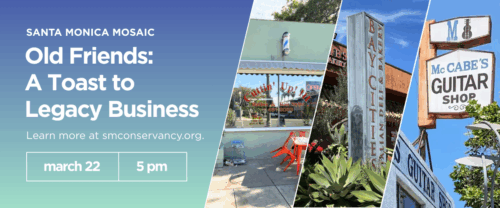
Tune in to our next Santa Monica Mosaic livestream event on Sunday, March 22, at 5 p.m., for a discussion on legacy businesses, their role in our local economy, and what it takes to maintain a business for nearly a century! Mosaic moderator Libby Motika will lead a conversation with locals and co-owners of some of Santa Monica’s most established legacy businesses. Explore the evolution of Cuttin’ Up! Barbershop, located in the historic Philomathean Hall building, Bay Cities Italian Deli & Bakery, and McCabe’s Guitar Shop.

This is a virtual event on Zoom. RSVP to this free livestream event.

Featuring Special Guests:

Xavier Banister

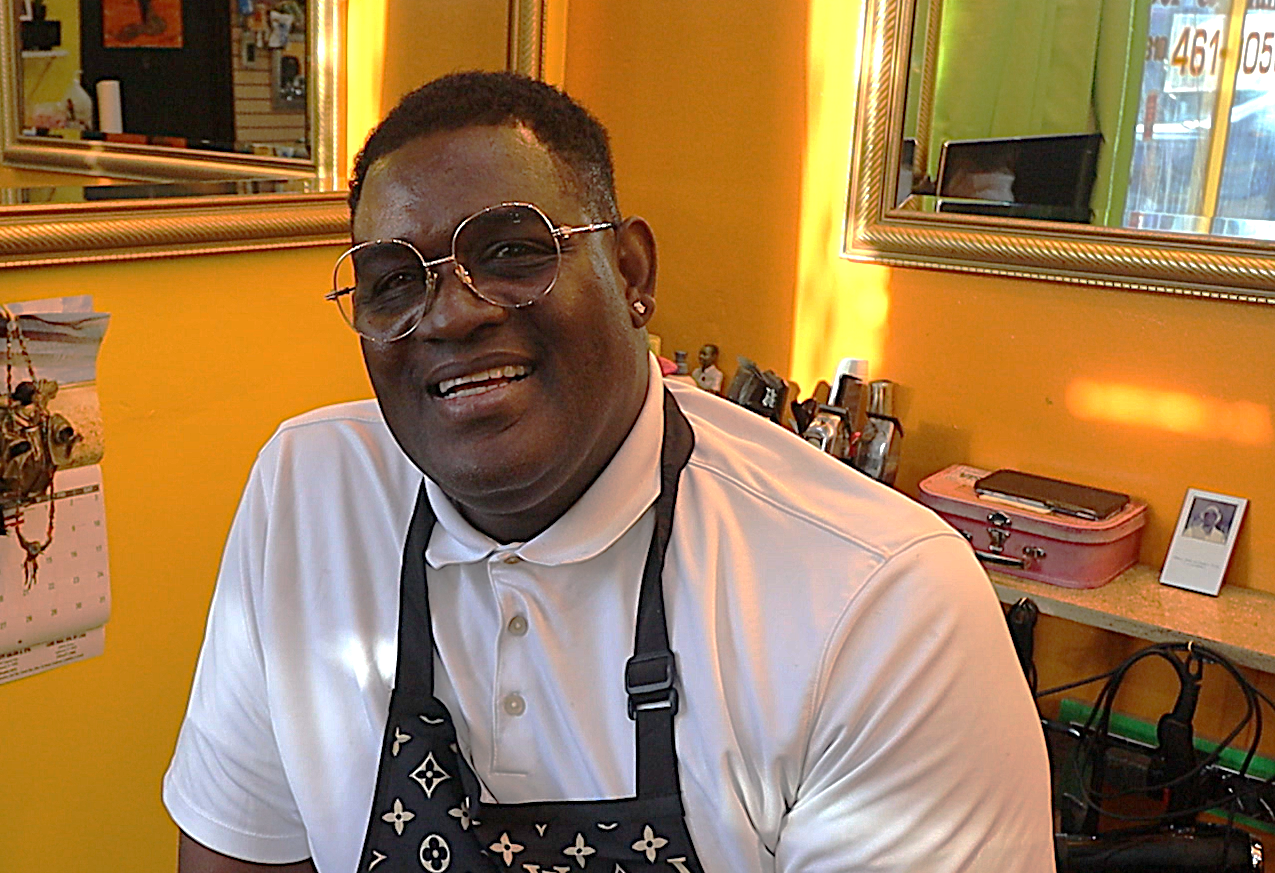
Xavier Banister, co-owner of Cuttin’ Up! Barbershop

When Xavier Banister took over Cuttin’ Up! Barbershop in 2004, he was continuing a legacy that had anchored a corner in Santa Monica’s Broadway neighborhood for 60 years. The Michigan native and Master Barber had already opened two other salons in the Crenshaw area of Los Angeles and was skeptical about a Santa Monica location. One of his clients, an investigator with the Santa Monica Police Department, assured him that this was the only Black-owned barbershop in Santa Monica and was being sold. Banister took a chance and over the years, he’s become an integral part of the Broadway community, offering a welcoming place to get a haircut or just hang out, play a game of chess or listen to a neighborhood musician. Xavier and his co-owner wife, Tamara, raised their son in Santa Monica and take pride in giving back to their community, such as volunteering with the Boys and Girls Club and providing free haircuts to the homeless.

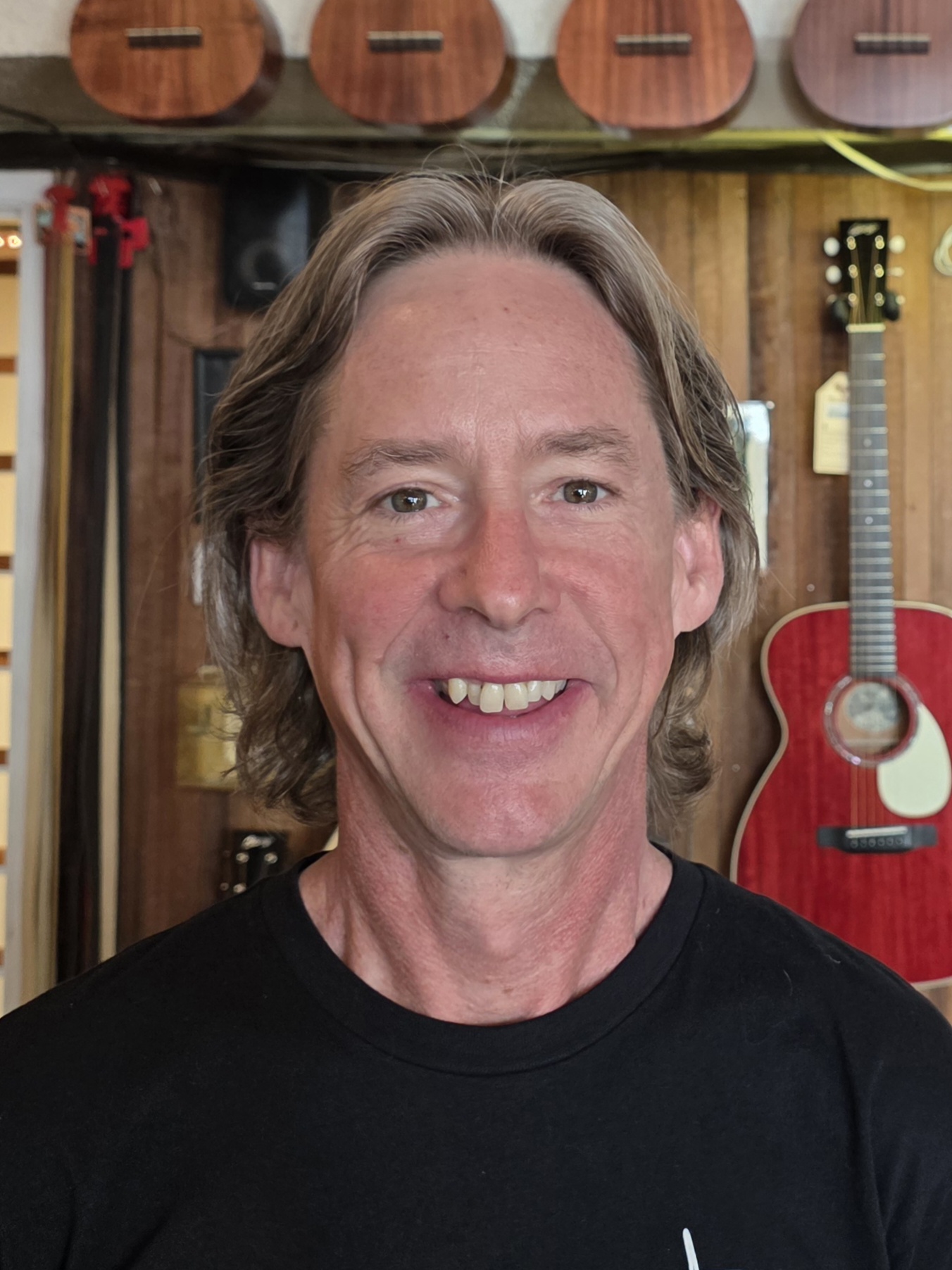
Walt McGraw, co-owner of McCabe’s Guitar Shop

Raised playing the fiddle in the mountains of East Tennessee, Walt McGraw grew up where music is a natural force, more like the weather. After studying poetry in Chicago, he headed into the corporate world, spending years at Nickelodeon, CNN, and Microsoft. What he didn’t realize when he got married in 2002 was that he was also marrying into a legendary guitar shop. Walt and his wife, Nora, are now the second-generation stewards of Santa Monica’s storied McCabe’s Guitar Shop in the Pico neighborhood. The place remains exactly what it has always been: a refuge for the curious, the hopeful, and the devoted listener. Music happens there. And the community, too. Walt recently picked up the ukulele, which makes him especially grateful that McCabe’s is the kind of place where anyone can grab an instrument — virtuoso or beginner — and feel welcome.

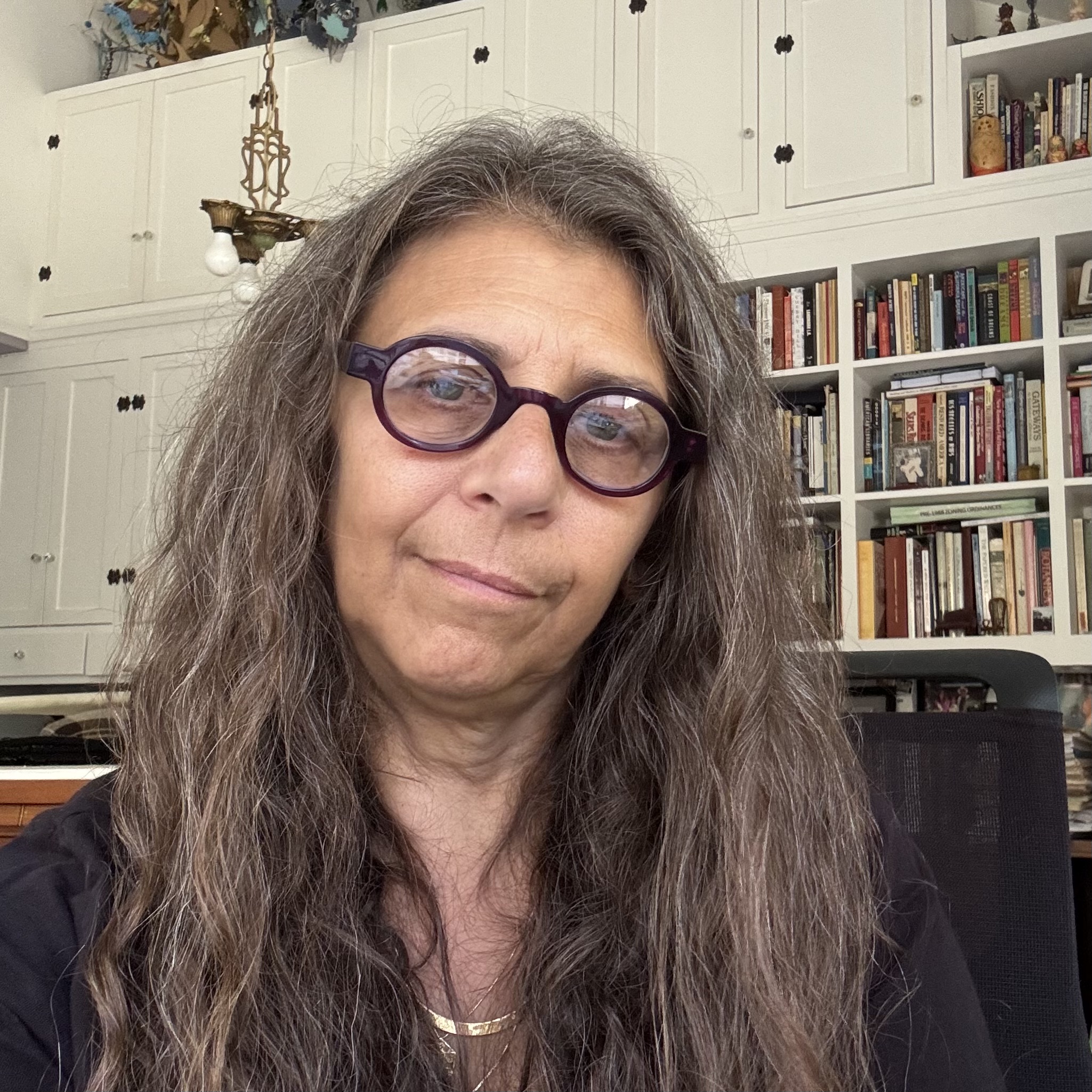
Nina Fresco

Nina Fresco, vice president of the Santa Monica Conservancy Board (and Bay Cities regular!)

Board Vice President, Nina Fresco, will relay the history of Bay Cities Italian Deli & Bakery, the oldest business on our docket. Coming from New York, the local, published historian was disheartened at her distance from Balducci’s in the West Village and was yearning for some fresh mozzarella. Upon her move to Santa Monica in 1992, she found Bay Cities and has eaten there regularly with her family for over 30 years. She is a member and former chair of the Santa Monica Planning Commission. She is also the former chair of the Civic Working Group, formed to advise Council on options for the future of the Santa Monica Civic Auditorium. Nina previously served three terms on the Landmarks Commission.

SANTA MONICA, CA – Due to popular demand, the Santa Monica-Malibu Unified School District and the Santa Monica Conservancy are extending a second invitation to the public to view Samohi’s New Deal art collection and artifacts on Saturday and Sunday, December 27 and 28th, from noon to 4 PM.

Encore: Celebrating New Deal History at Samohi! (Banner) | Event occurs Dec. 27-28, noon to 4 p.m.

Samohi has the most comprehensive collection of artworks from the New Deal in Santa Monica, which includes sculpture, art objects, mosaics and paintings. Produced under President Franklin Delano Roosevelt’s  Works Progress Administration/Federal Art Project, artists were commissioned and paid to create public artworks, providing them with critical economic opportunities during the Depression. The paintings now exhibited at the Roberts Art Gallery at Samohi are rarely displayed and will be on view only through December. Visitors are also invited to view the Viking Statue and Senior Bench, New Deal artworks recently relocated and restored, which received a 2025 Preservation Award from the Santa Monica Conservancy.

Registration is free: https://smc.givecloud.co/encore-samohi

The Samohi campus was rebuilt in the 1930s due to several converging historic events: the catastrophic Long Beach earthquake of 1933, which devastated our schools; the passage of the Field Act, requiring strict new building codes for seismic safety; and the availability of Federal funds from a variety of New Deal economic recovery programs. Today’s campus reflects a more recent Master Plan; however, the preservation of New Deal art and artifacts retains essential links to Samohi’s history.

Santa Monica was transformed during the New Deal with major public works and renovation projects. Our City Hall, Main Post Office, St. Monica Statue, Colorado Viaduct, California Incline, Roosevelt Highway, reconstructed public schools, and less visible water management projects were some of the results.

Entry will be through the 4th Street gate, and at the Olympic and 6th Street gates (some parking may be available).

“Lifting As We Climb” celebration marks Santa Monica’s 150th anniversary with tribute to a philanthropic Black women’s organization

SANTA MONICA, CA – The Santa Monica Conservancy, Quinn Research Center, and 18th Street Arts Center will host “Lifting As We Climb: Celebrating the Philomathean Charity Literary and Art Club” on Tuesday, December 9, 2024, from 10:00 AM to 12:00 PM. The event will begin with a landmark plaque unveiling at 1802 Broadway, followed by a celebration at 18th Street Arts Center at 1639 18th Street.

Image: The Founding Philomatheans Courtesy of The Quinn Research Center. RSVP at tinyurl.com/dec9-philomathean for Lifting As We Climb: Celebrating the Philomathean Charity Literary & Art Club.

Image: The Founding Philomatheans Courtesy of The Quinn Research Center. RSVP at tinyurl.com/dec9-philomathean for Lifting As We Climb: Celebrating the Philomathean Charity Literary & Art Club.

The Philomathean Charity Literary and Art Club was founded in 1921 by a group of women, mostly domestic workers, who pooled money together and diligently hosted fundraisers to achieve their mission. It is their persistence and hard work that created a thriving community asset that provided tangible support to Black community members who were barred historically from opportunities due to racism. In 1958, the Philomatheans bought land at 1810 Broadway to build a meeting hall and host retail spaces, allowing them to serve their community and pay their mortgage. By 1970, the mortgage was paid off. The land is still owned by the Philomatheans today with retail spaces that hosts a Black-owned barbershop as well as an early childhood center, The First School. Rental income is utilized by the Philomatheans to offer scholarships for high school students in the neighborhood to support their college expenses for four years. The landmark was designated through a Community Development Grant from the City of Santa Monica.

Learn more about the Philomathean Club in our 3-Minute History series:

“Philomathean Hall is the first building on Historic Broadway to receive landmark status. This was a ten-year group effort in partnership with the Santa Monica Conservancy, 18th Street Arts Center, and the Quinn Research Center”, said Carolyne Edwards, founder of the Quinn Research Center and historian and business manager of the Philomathean Club.

The landmark plaque unveiling ceremony at 1802 Broadway will feature remarks from current members of the Philomathean Board.

Following the unveiling, attendees are invited to continue the celebration at 18th Street Arts Center, to enjoy refreshments and a performance by musician Rasheed Ali.

Lifting As We Climb is supported by City of Santa Monica Microgrant in honor of Santa Monica’s 150th Anniversary. The event is free and open to the public. Register at tinyurl.com/dec9-philomathean.

For more information, contact: Melina Castorillo, Communications Associate Santa Monica Conservancy melina@smconservancy.org

Photo Reference: Remains of the Palisades Business Block. View from Swarthmore at Sunset Blvd. | Photo credit: LA City Planning 2025 Mosaic Episode 3: When Landmarks Fall

When Landmarks Fall: Honoring the Past to Inspire the Future premieres Sunday, November 2, at 5 p.m. This is the final livestream event of the 2025 Mosaic season, dedicated to Pacific Palisades following its devastation in the January wildfire.

The first two events, The Way We Were and A Cultural Landscape, explored “what was” with a reflection on the Palisades’ origins and growth as a community. When Landmarks Fall will discuss “what’s next”, bringing together three civic leaders to discuss historic resources that were impacted during the fire and various approaches toward recovery.

“We’ve been honored to tell the story of our stricken coastal neighbors as they face the long recovery ahead,” said Mosaic co-producer Steve Loeper. “We stand in support of their determination to rebuild their cherished community.”

Don’t forget to RSVP for the watch party at the Shotgun House!

Doors open at 4:30 p.m. to ensure attendees are seated upon the start of the Mosaic livestream event at 5:00 p.m. Please email alissa@smconservancy.org to reserve your spot.

Meet Our Panelists

Ken BernsteinKen Bernstein is a Principal City Planner for the Los Angeles Department of City Planning, where he serves as Manager of the City’s Office of Historic Resources and directs Los Angeles’ historic preservation policies. As lead staff member for the City’s Cultural Heritage Commission, he has overseen the completion of SurveyLA, a multi-year citywide survey of historic resources, and has led the creation of a comprehensive historic preservation program for Los Angeles. He previously served for eight years as Director of Preservation Issues for the Los Angeles Conservancy. Ken is currently an Adjunct Professor in urban planning for the USC Price School of Public Policy and serves as a Senior Fellow for UCLA’s Luskin School of Public Affairs. He holds a Master’s Degree from Princeton University and a B.A. from Yale University. He is the author of Preserving Los Angeles: How Historic Places Can Transform America’s Cities.


Barbara TejadaBarbara Tejada is the Cultural Resources Program Manager for the Angeles District of California State Parks. In this role, Barbara oversees historic structures and landscapes, museum collections, archaeological resources, and collections, and acts as the district tribal liaison. Barbara has over 25 years’ experience in cultural heritage in Southern California, working for the Getty Museum, Caltrans, cultural resource consulting firms, and State Parks, with expertise in pre-contact and historical archaeology. She has participated in several archaeological projects throughout the region. Barbara has contributed to the preservation and interpretation of California’s diverse cultural heritage. Barbara also sits as board chair for the Oakbrook Chumash Indian Museum in Thousand Oaks, where she works to promote understanding of Indigenous history and culture.


Randy YoungRandy Young is a local historian, author, and activist who has lived in the Rustic Canyon neighborhood of Pacific Palisades since 1953. After graduating from Pacific Palisades High School, Randy went on to become president of the Thomas Young Photo Studio from 1980 to 1995, and since 1974, chairman of the Casa Vieja Press. There, he authored or coauthored several books on local history, including “Rustic Canyon and the Story of the Uplifters” and “Santa Monica Canyon and Other Tales.” As a longtime community advocate, Randy’s associations have included the Pacific Palisades Community Council, Will Rogers Cooperative Association, Southern California Environment and History Conference, Los Angeles Cultural Heritage Commission, Los Liones State Park, and the Brentwood-Palisades Community Plan.